Arsacids (Parthians)
Vologases VI
بلاش ششم
- Reign
- 207/208 to after 221/222 CE
- Dynasty
- Arsacids (Parthians)
- Persian page
- فارسی
Featured dossier
Vologases VI: the brother who split the kingdom
Vologases VI succeeded his father Vologases V, but about 213 CE his younger brother Artabanus IV rose against him. By 216 Rome treated Artabanus as the king of Parthia, yet Vologases’ coins were struck at Seleucia until at least 221/222 CE. The split came in the very years when Ardashir was gathering strength in Persis.
- Artabanus’ revolt (CE)
- ~213
- last Seleucia coin (Iranica)
- 221/222
Map: a divided kingdom
Administration & economyafter 207/208 CE1 of 3
Accession
Iranica: after 207/208 CE Vologases VI followed his father on the throne.
Certainty: Probable
Sources: K. Schippmann, Encyclopaedia Iranica, 1986, updated 2016 · D. Sellwood, 1980
BattleCampaignBuildingAdministration & economyReligionArrow keys, Home/End and Space work.
Three separate layers
Each section has three layers: “Historical evidence” is only what the sources say; “Philosophical interpretation” is our reading by the standard of property and liberty; “Modern cultural meaning”. Quotations come only from published translations, with references.
Historical evidencePhilosophical interpretationModern cultural meaning
Dossier · 1
Two brothers, two kings
Iranica: after 207/208 CE Vologases VI followed his father, but soon (c. 213) had to fight his younger brother Artabanus IV. Caracalla’s request in 216 for the hand of Artabanus’ daughter is “clear evidence” that Artabanus was then monarch, even though Vologases’ coinage continued at Seleucia until at least 221/222.
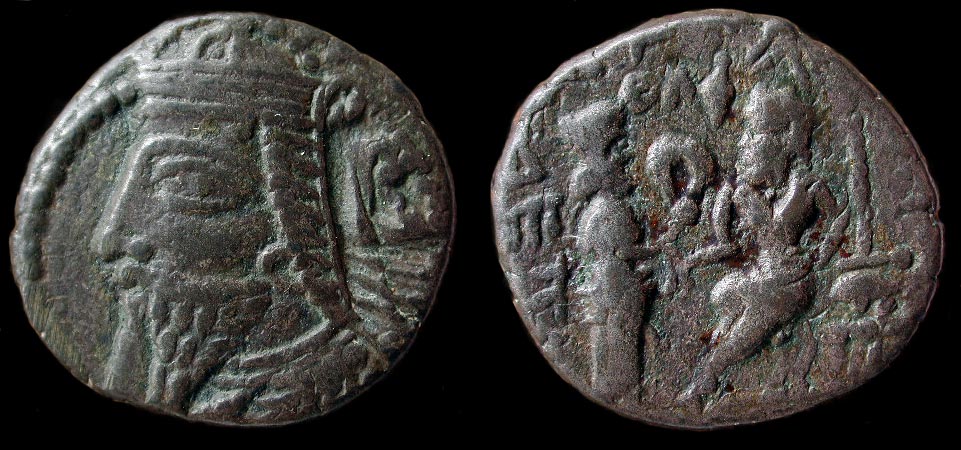
The Seleucia mint stayed with Vologases, so Babylonia probably did too. Rome dealt with Artabanus. Each could call himself king. In these same years Ardashir in Persis was taking the neighbouring lands one by one.
Two kings meant two tax machines and two armies, both paid for by the people. The Arsacid family quarrel opened the road for a man who took everything at once.
Sources: K. Schippmann, Encyclopaedia Iranica · D. Sellwood
Synthesis
Vologases VI was king of half a kingdom. His brother Artabanus was the other king, and Rome dealt with him. This split, in the years when Ardashir was rising in Persis, was one reason the Arsacids fell.
Bibliography
- K. Schippmann, Encyclopaedia Iranica, Arsacids ii. The Arsacid dynasty (1986, updated 2016). https://www.iranicaonline.org/articles/arsacids-ii/
- D. Sellwood, An Introduction to the Coinage of Parthia, 2nd ed. (1980). The standard numbering of Parthian coins (“S”); some of its attributions have since been revised.
All photos are from Wikimedia Commons; licence and author were checked on each file page.
Vologases V, his fatherArtabanus IV, his brotherThe Arsacid dynasty