The Achaemenids
Cyrus the Great
کوروش بزرگ
Epithets and titles
- Great Kingšarru rabûofficial titleone of his titles on the Cyrus Cylinder (“king of the universe, the great king, the powerful king…”)Source: Cyrus Cylinder, BM 90920, tr. I. Finkel (British Museum)
- Reign
- c. 559–530 BCE
- Dynasty
- The Achaemenids
- Persian page
- فارسی
Featured dossier
Cyrus the Great: from Anshan to Babylon
The minor king of Anshan who within about twenty years took Media, Lydia, the Ionian cities, eastern Iran and Babylon, and built the largest empire the world had yet seen. This dossier follows his life from contemporary documents, gives Greek accounts with the teller’s name, and calls legend legend. It ends at his tomb in Pasargadae.
- reign, 559–530 BCE
- c. 30 years
- kingdoms: Anshan, Media, Lydia, Babylon
- 4
- height of the tomb at Pasargadae
- 11.1 m
- conflicting accounts of his death
- 4
Animated map: life and reign
Administration & economyc. 600 BCE (uncertain)1 of 14
Born, son of Cambyses I
Son of Cambyses, “king of Anshan”, and grandson of Cyrus I (Cyrus Cylinder). According to Herodotus his mother was Mandane, daughter of Astyages.
Certainty: ProbableNo contemporary document gives the year of birth. Dandamayev takes “about 600 BCE” from Dinon (in Cicero): he became king at 40 and ruled for 30 years.
Sources: The Cyrus Cylinder (BM 90920), British Museum, 539 BCE · M. A. Dandamayev, Encyclopaedia Iranica, 1993 · Herodotus, tr. A. D. Godley (Loeb, 1920), 1920
BattleCampaignBuildingAdministration & economyReligionArrow keys, Home/End and Space work.
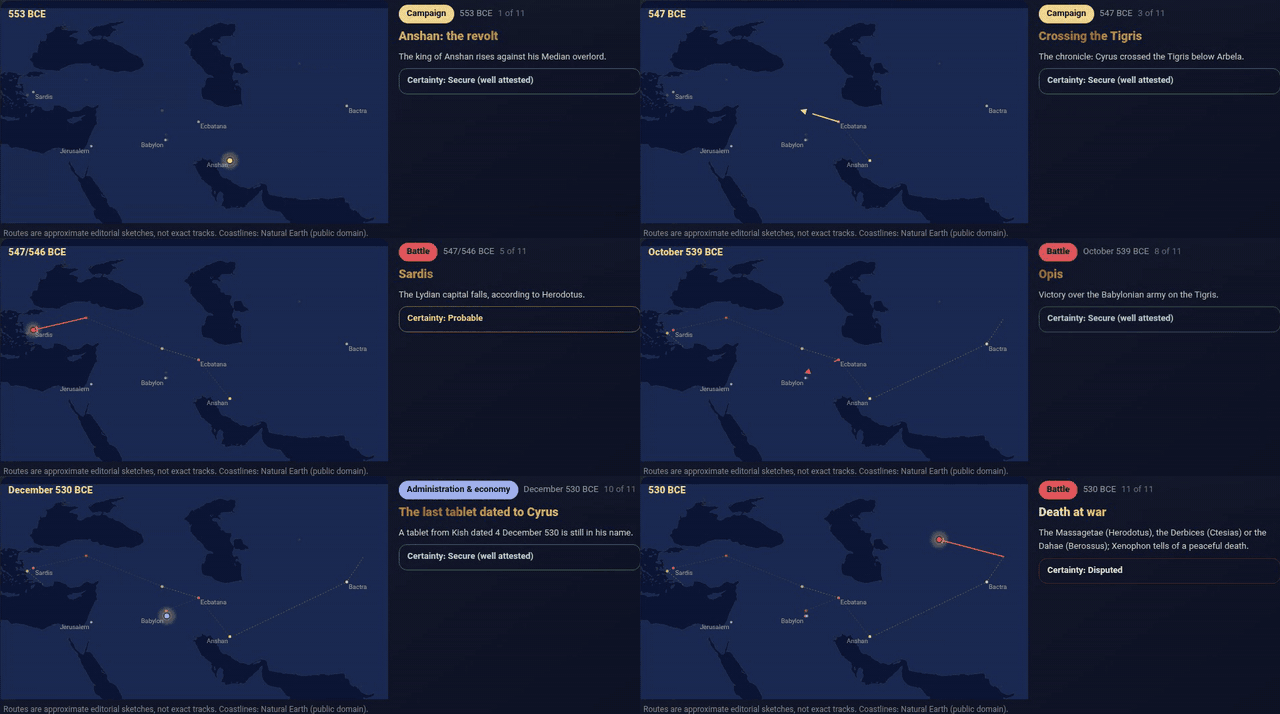
The conquests (553–530 BCE)
From Anshan to Ecbatana, Sardis, Ionia, the east and Babylon, and finally death in the north-east. The Babylonian steps come from the Nabonidus Chronicle, the western steps from Herodotus, and the eastern ones are inferred from the Bisotun list. The routes are sketches.
Campaign553 BCE1 of 11
Anshan: the revolt
The king of Anshan rises against his Median overlord.
Certainty: Secure (well attested)
BattleCampaignBuildingAdministration & economyReligionArrow keys, Home/End and Space work.
Three separate layers
Each section has three layers: “Historical evidence” is only what the sources say; “Philosophical interpretation” is our reading by the standard of property and liberty; “Modern cultural meaning”. Quotations come only from published translations, with references.
Historical evidencePhilosophical interpretationModern cultural meaning
Dossier · 1
Sources: contemporary documents and Greek stories
For Cyrus we have a few contemporary documents: the Nabonidus Chronicle, the Nabonidus cylinder, the Cyrus Cylinder, a brick from Ur, and Babylonian administrative tablets. They are short and mostly written from Babylon’s point of view. The long stories come from the Greeks: Herodotus, Ctesias and Xenophon. The books of Ezra and Isaiah give the Judean view.
On this page, what a contemporary document says is “evidence”. A Greek account always comes with the teller’s name, and what is legend is called legend.
Before he was an Iranian figure of memory, Cyrus was a figure in other peoples’ books: the Babylonians, the Greeks and the Judeans each built their own Cyrus.
Sources: M. A. Dandamayev, Encyclopaedia Iranica · Babylonian chronicle (ABC 7), tr. A. K. Grayson (1975), on Livius.org · The Cyrus Cylinder (BM 90920), British Museum · Herodotus, tr. A. D. Godley (Loeb, 1920) · The Bible, King James Version
Dossier · 2
Lineage, birth and the childhood legend
In his Cylinder Cyrus introduces himself as son of Cambyses, the great king, king of Anshan; grandson of Cyrus, the great king, king of Anshan; descendant of Teispes. On a brick from Ur he calls himself “king of all the world, king of the land of Anshan”. According to Herodotus and Xenophon his mother was Mandane, daughter of Astyages king of the Medes, and most scholars accept this. His year of birth is unknown; the usual estimate is about 600 BCE.
Astyages, his maternal grandfather
We have no documents about his childhood. Everything said about it comes from Greek stories, and Dandamayev says Herodotus’ version contains folklore.
The tale of the abandoned child who becomes king exists in many cultures. Its value lies more in showing how people imagined Cyrus than in reporting events.
Sources: The Cyrus Cylinder (BM 90920), British Museum · M. A. Dandamayev, Encyclopaedia Iranica · Herodotus, tr. A. D. Godley (Loeb, 1920) · Xenophon, tr. H. G. Dakyns
Dossier · 3
Anshan and the end of Media (559–550 BCE)
Around 559 BCE Cyrus succeeded his father as king of Anshan, a Median vassal. The Nabonidus cylinder places his revolt in 553/552 BCE. The Nabonidus Chronicle says that in 550 BCE Astyages marched against him, but his army mutinied and handed him over to Cyrus. Cyrus took Ecbatana and carried its treasure to Anshan. According to Herodotus, Harpagus, a Median general, had already sided with Cyrus.
The Astyages dossier and the Median mutiny
The end of Media was more a transfer of power within a related world than a foreign conquest. Median nobles kept their places in the new order, and the Greeks long went on calling the Persians “Medes”.
From here Persia and Media were joined in one state, the base on which Darius later built.
Sources: M. A. Dandamayev, Encyclopaedia Iranica · Babylonian chronicle (ABC 7), tr. A. K. Grayson (1975), on Livius.org · Herodotus, tr. A. D. Godley (Loeb, 1920)
Dossier · 4
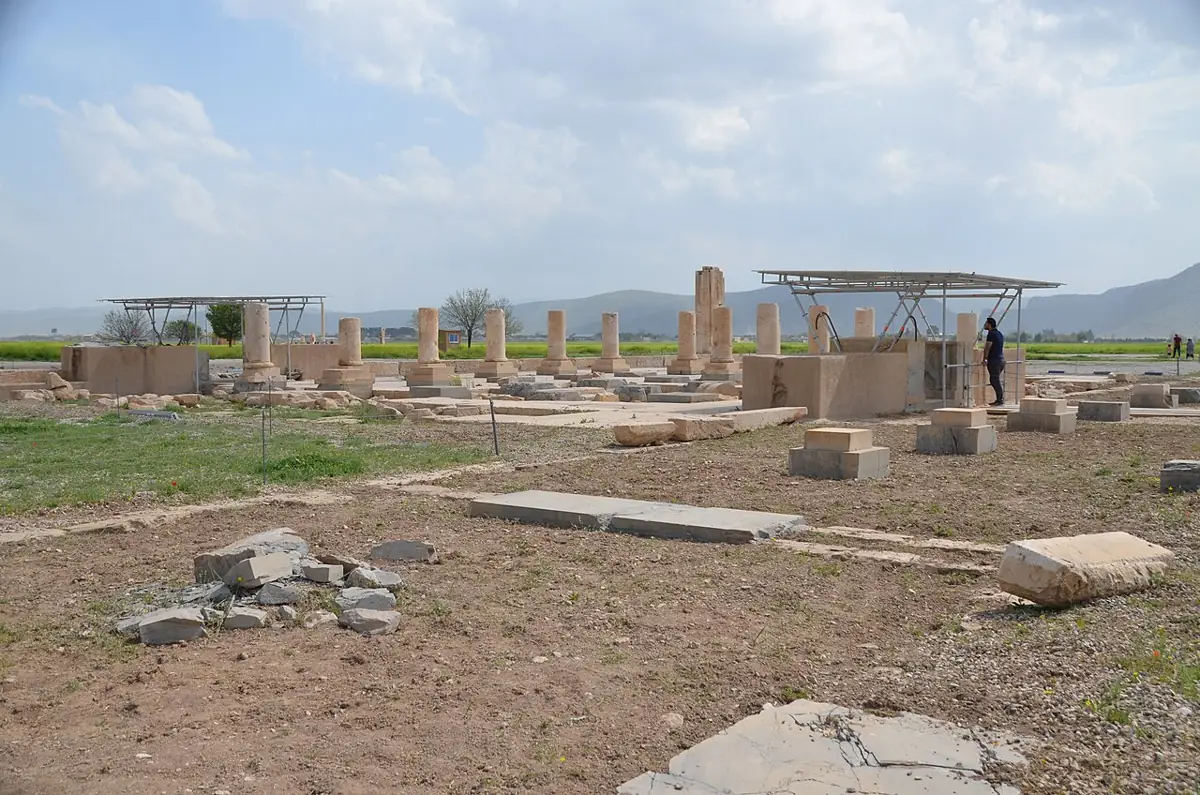
Pasargadae: a city on the battlefield
Strabo says Cyrus held Pasargadae in honour because he defeated Astyages there, and he built a city and a palace as a memorial of the victory. Archaeologists date most of the buildings to 546–530 BCE. Gate R had columns over 16 m high and winged bulls in Assyrian style. On its doorway stands a winged figure 3 m high, with an Egyptian crown, an Elamite robe and an Ionian rosette border. Hallock suggested that Pasargadae’s name in the Elamite tablets of Persepolis was “Batrakataš”.
Cyrus held Pasargadae in honour, because he there conquered Astyages the Mede in his last battle, transferred to himself the empire of Asia, founded a city, and constructed a palace as a memorial of his victory.
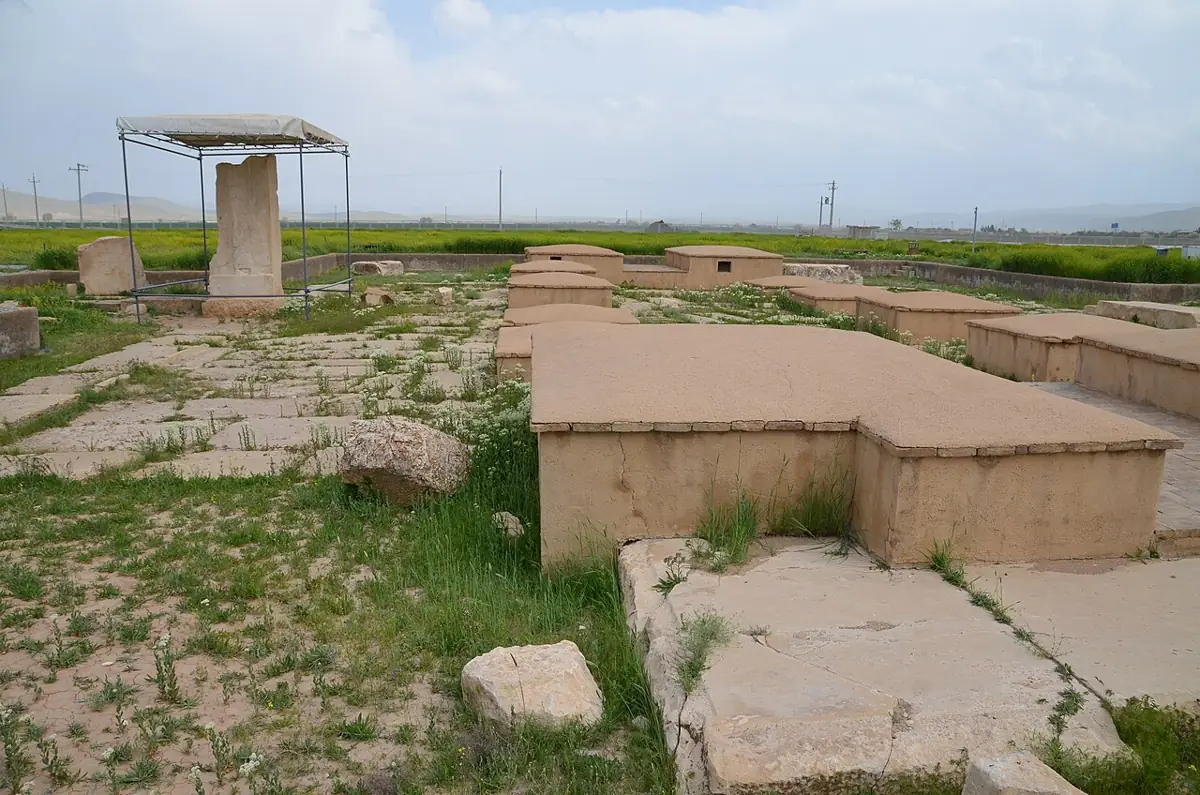
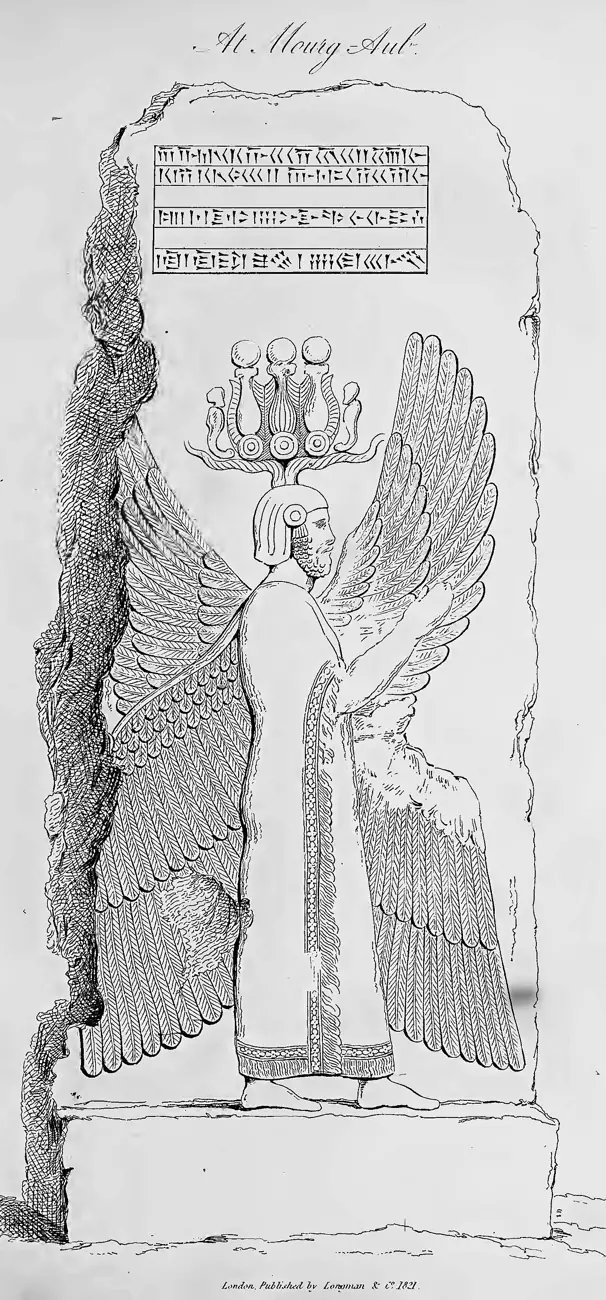
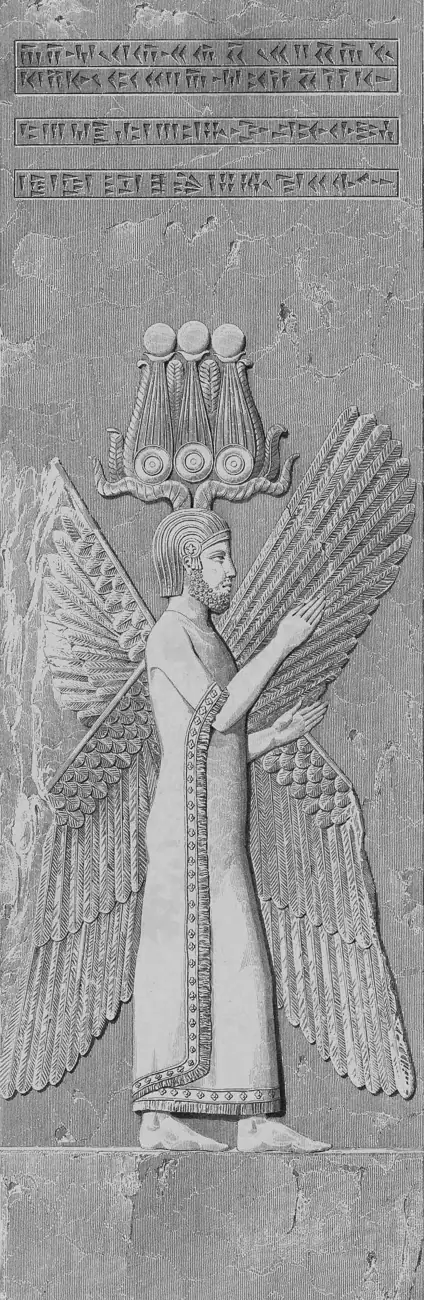
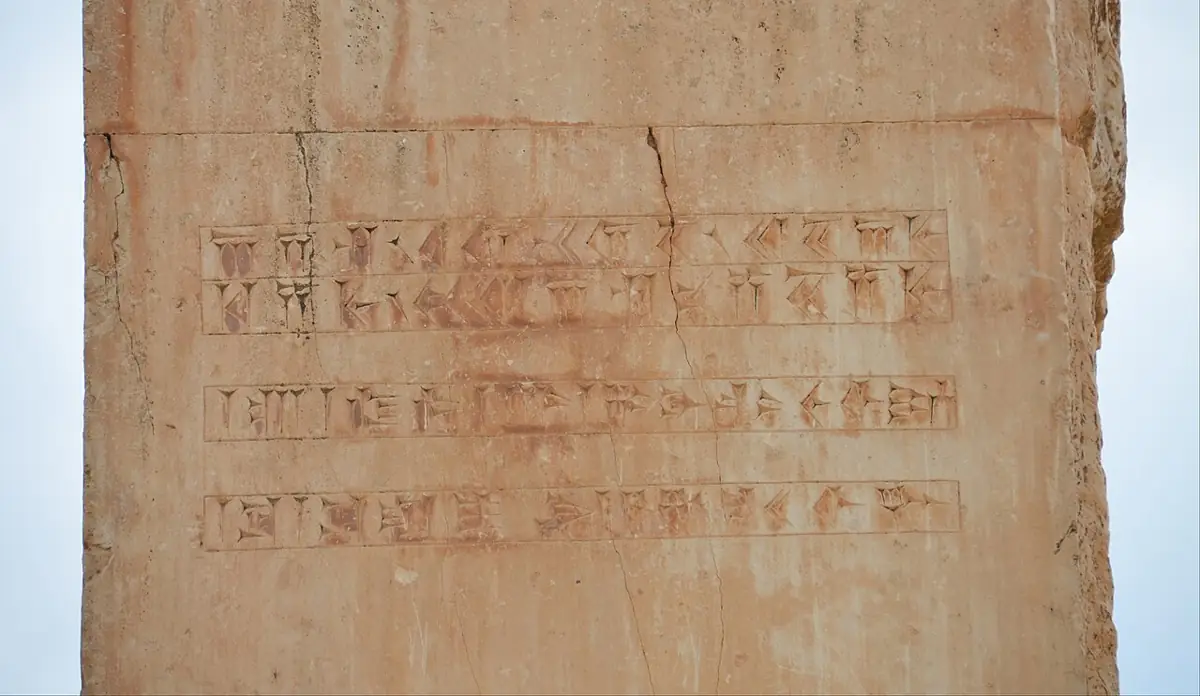
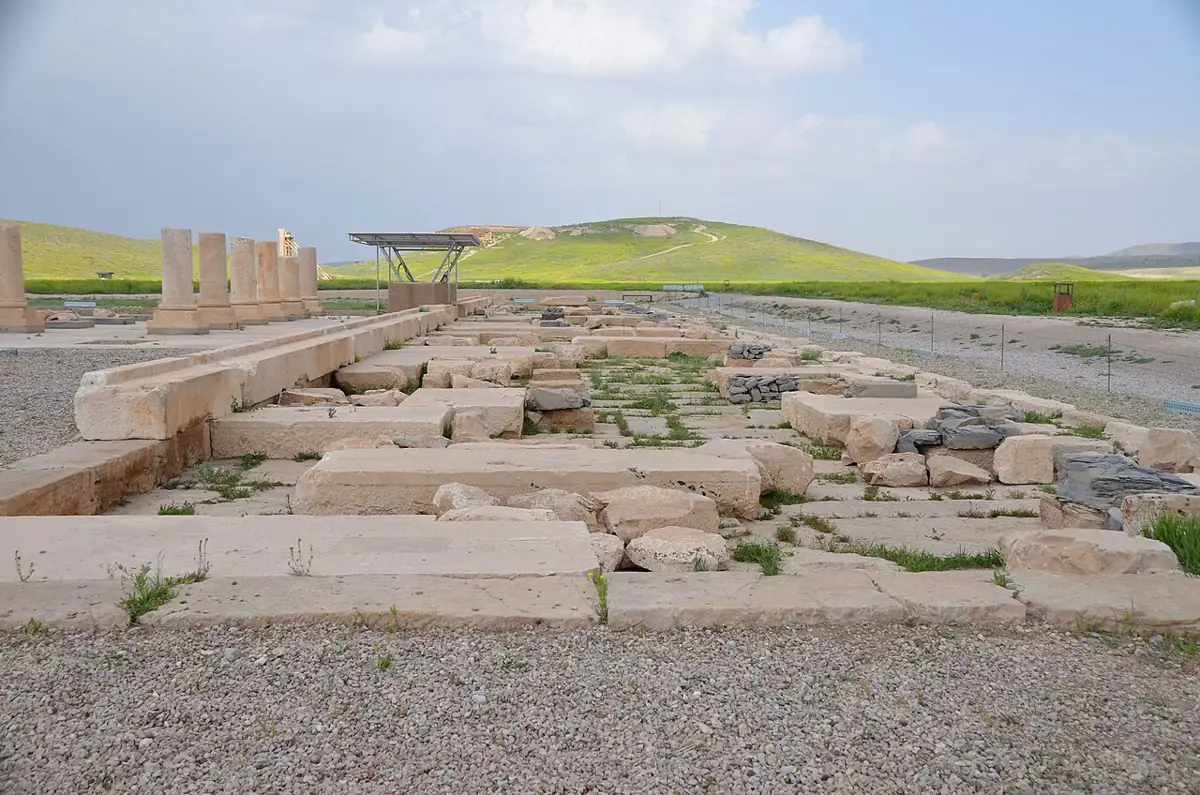
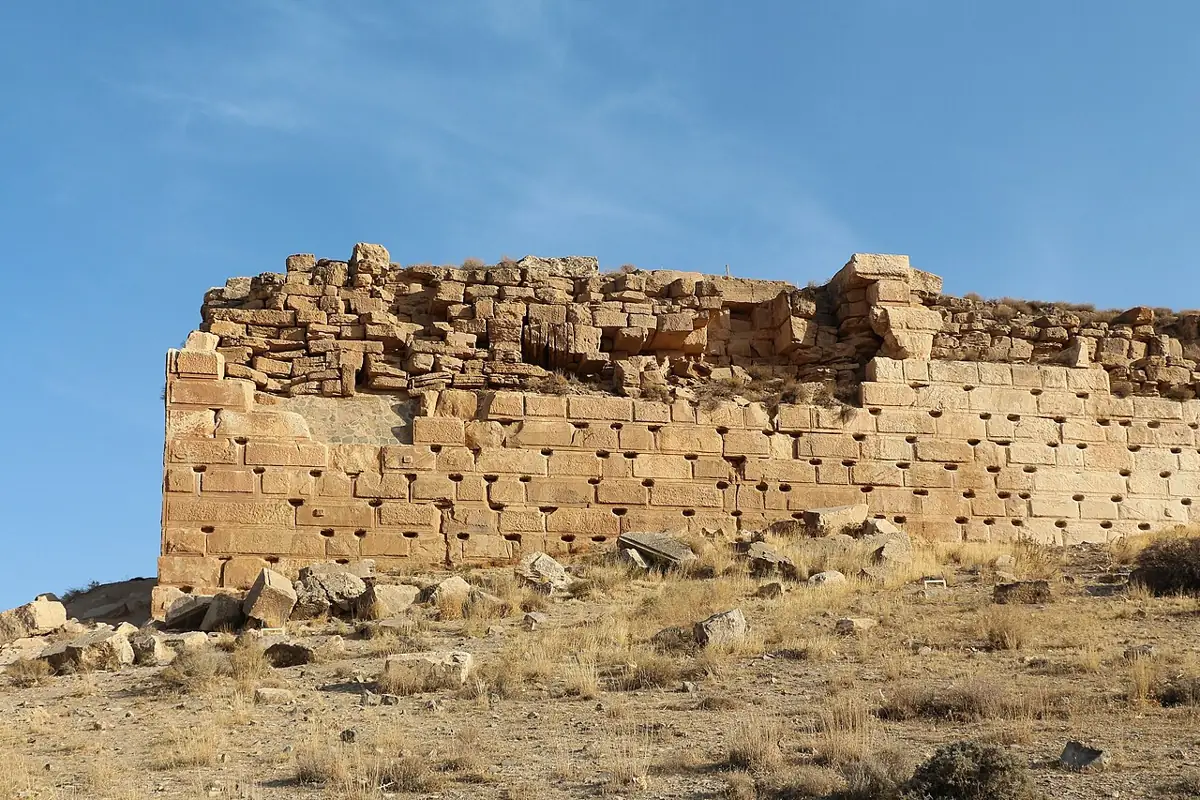
The winged figure shows that Pasargadae’s art borrowed from many conquered lands: Assyria, Egypt, Elam, Lydia and Ionia. Stronach considers the inscription “I am Cyrus the king, an Achaemenid” on the palaces to be an addition of Darius’ time.
Pasargadae was inscribed on UNESCO’s World Heritage List in July 2004.
Sources: Strabo, tr. H. L. Jones (Loeb, 1930) · D. Stronach and H. Gopnik, Encyclopaedia Iranica
Dossier · 5
Lydia and Croesus (547/546 BCE)
Croesus, king of Lydia, crossed the Halys and invaded former Median territory. After an indecisive battle at Pteria he went back to Sardis. According to Herodotus, Cyrus followed him in winter and took Sardis. The Nabonidus Chronicle, under Nabonidus’ ninth year (547 BCE), says Cyrus crossed the Tigris below Arbela, marched to a land and killed its king. The name of that land is damaged. Some have read it as “Lydia”, but Cargill doubts this reading.
Croesus’ end has two conflicting versions. Herodotus (1.86–87) says Cyrus placed him on a pyre, then relented; Apollo sent rain to put out the fire and Croesus became Cyrus’ adviser. Bacchylides (Ode 3, 468 BCE), writing before Herodotus, says Croesus lit the pyre himself and Apollo carried him to the land of the Hyperboreans. If the chronicle’s “Lydia” reading is right, Croesus was killed. So we do not really know his fate.
With Sardis, the richest kingdom of Asia Minor and the first coin-minting state in the world passed to the Persians.
Sources: Herodotus, tr. A. D. Godley (Loeb, 1920) · Babylonian chronicle (ABC 7), tr. A. K. Grayson (1975), on Livius.org · M. A. Dandamayev, Encyclopaedia Iranica · Bacchylides, tr. R. C. Jebb
Dossier · 6
The Ionian cities and Harpagus
According to Herodotus, the Greek coastal cities had earlier refused Cyrus’ offer to break with Croesus. After Sardis, Harpagus the Mede took them one by one by building ramps against their walls. The Phocaeans fled by ship and the people of Teos left for Abdera in Thrace. Then Harpagus took Caria and Lycia; the people of Xanthos fought to the death.
Here the encounter between Greeks and Persians began, an encounter that sixty years later led to the great wars.
Many Greek images of “the Persian” took shape in these years.
Sources: Herodotus, tr. A. D. Godley (Loeb, 1920) · M. A. Dandamayev, Encyclopaedia Iranica
Dossier · 7
The east: lands without a record
No contemporary account of Cyrus’ eastern wars survives. At the start of his reign, at Bisotun, Darius counts Drangiana, Areia, Chorasmia, Bactria, Sogdiana, Gandhara, Sattagydia and Arachosia as his. Since Darius does not say he took them himself, scholars infer that Cyrus had. The city of Cyropolis on the Jaxartes bore his name.
This section is more inference than report. The map on this page also marks these places as sketches.
We know Cyrus’ eastern realm more from Darius’ list than from any record of Cyrus’ own deeds.
Sources: Darius I, Bisotun inscription (DB) §6 · M. A. Dandamayev, Encyclopaedia Iranica
Dossier · 8
Babylon, 539 BCE
According to the Nabonidus Chronicle, in October 539 BCE Cyrus fought the Babylonian army at Opis on the Tigris, took plunder and killed people. Sippar fell without battle, and two days later his army under Ugbaru entered Babylon without battle. Cyrus himself entered seventeen days later, and the chronicle says the temple rites were not interrupted. The gods Nabonidus had brought to Babylon were returned to their cities. Cyrus took the title “king of Babylon, king of the lands”.
The Cyrus Cylinder is a building inscription in the tradition of Babylonian kings. In it Cyrus calls himself Marduk’s chosen one and speaks of returning people and gods to their places. It is not “the first charter of human rights”: that label is from the 20th century, and the text itself makes no such claim. Its full text and discussion are on the Cylinder page.
The violence at Opis and the calm at Babylon are in the same chronicle. The historical Cyrus was neither angel nor tyrant; he was a shrewd ruler who knew how to treat a great city.
Sources: Babylonian chronicle (ABC 7), tr. A. K. Grayson (1975), on Livius.org · The Cyrus Cylinder (BM 90920), British Museum · M. A. Dandamayev, Encyclopaedia Iranica
Dossier · 9
The Judeans, Ezra and Isaiah
The Book of Ezra says that in his first year Cyrus ordered the Judeans to return to Jerusalem and rebuild the Temple. The edict appears in two forms: in Hebrew (Ezra 1) and in Aramaic (Ezra 6). The Book of Isaiah (chapters 40–55) calls Cyrus the Lord’s “anointed”.
Thus saith Cyrus king of Persia, The LORD God of heaven hath given me all the kingdoms of the earth; and he hath charged me to build him an house at Jerusalem, which is in Judah.
Thus saith the LORD to his anointed, to Cyrus, whose right hand I have holden, to subdue nations before him;
Bickerman considered the Aramaic version authentic; others think both are later rewritings. The Cyrus Cylinder does not mention the Judeans and speaks only of Mesopotamian cities and nearby lands. So a policy of return fits the spirit of the Cylinder, but the specific edict for the Judeans is reported only by the Bible.
From here Cyrus became a praised figure in Jewish and Christian tradition, and later in European thought.
Sources: The Bible, King James Version · M. A. Dandamayev, Encyclopaedia Iranica · The Cyrus Cylinder (BM 90920), British Museum
Dossier · 10
Titles, administration and the Greek image
Cyrus’ titles grew with each victory: first “king of Anshan”, then in the Cylinder “great king, king of Babylon, king of Sumer and Akkad, king of the four quarters of the world”. By 535 BCE Babylonia and Across-the-River had become one great satrapy. Herodotus says that under Cyrus there was no fixed tribute, only gifts; fixed tribute came with Darius, and that is why the Persians called Cyrus “father”.
In the reigns of Cyrus and Cambyses after him there was no fixed tribute, but payment was made in gifts.
the Persians called Darius the merchant, Cambyses the master, and Cyrus the father; for Darius made petty profit out of everything, Cambyses was harsh and arrogant, Cyrus was merciful and always worked for their well-being.
Xenophon’s Cyropaedia (The Education of Cyrus), c. 370 BCE, shows Cyrus as the ideal ruler and has him die peacefully in bed. The book is a didactic novel, not history. The Greeks, though they fought the Persians, praised Cyrus more than any other Persian king.
The title “father” is a judgment: according to Herodotus, the Persians measured Cyrus by the weight of tribute.
Sources: The Cyrus Cylinder (BM 90920), British Museum · M. A. Dandamayev, Encyclopaedia Iranica · Herodotus, tr. A. D. Godley (Loeb, 1920) · Xenophon, tr. H. G. Dakyns
Dossier · 11
Death (530 BCE): conflicting accounts
Cyrus died in 530 BCE at war with a people of the north-east, near the Oxus. A tablet from Kish dated 4 December 530 is still in his name, so he died at the end of that year. The sources tell the manner of death in several ways:
Herodotus (1.201–214): killed fighting the Massagetae and their queen Tomyris, who pushed his head into a skin full of blood. Herodotus himself says “many stories” are told of Cyrus’ death.
Ctesias: wounded by an Indian spear fighting the Derbices, who had Indian allies, and died a few days later. Cambyses sent his body to Persia with Bagapates.
Berossus: died fighting the Dahae.
Xenophon: died peacefully in bed, in the Cyropaedia.
Many stories are told of Cyrus’ death; this, that I have told, is the most credible.
These accounts do not agree. Sancisi-Weerdenburg says the precise facts of Cyrus’ death cannot be known. Only the year of death and a war in the north-east are fairly certain.
The founder of the largest empire the world had yet seen died in a war far from home, against peoples we know only by a few names.
Sources: M. A. Dandamayev, Encyclopaedia Iranica · Herodotus, tr. A. D. Godley (Loeb, 1920) · Ctesias of Cnidus (via Photius’ epitome) · Xenophon, tr. H. G. Dakyns
Dossier · 12
The tomb of Cyrus: the structure
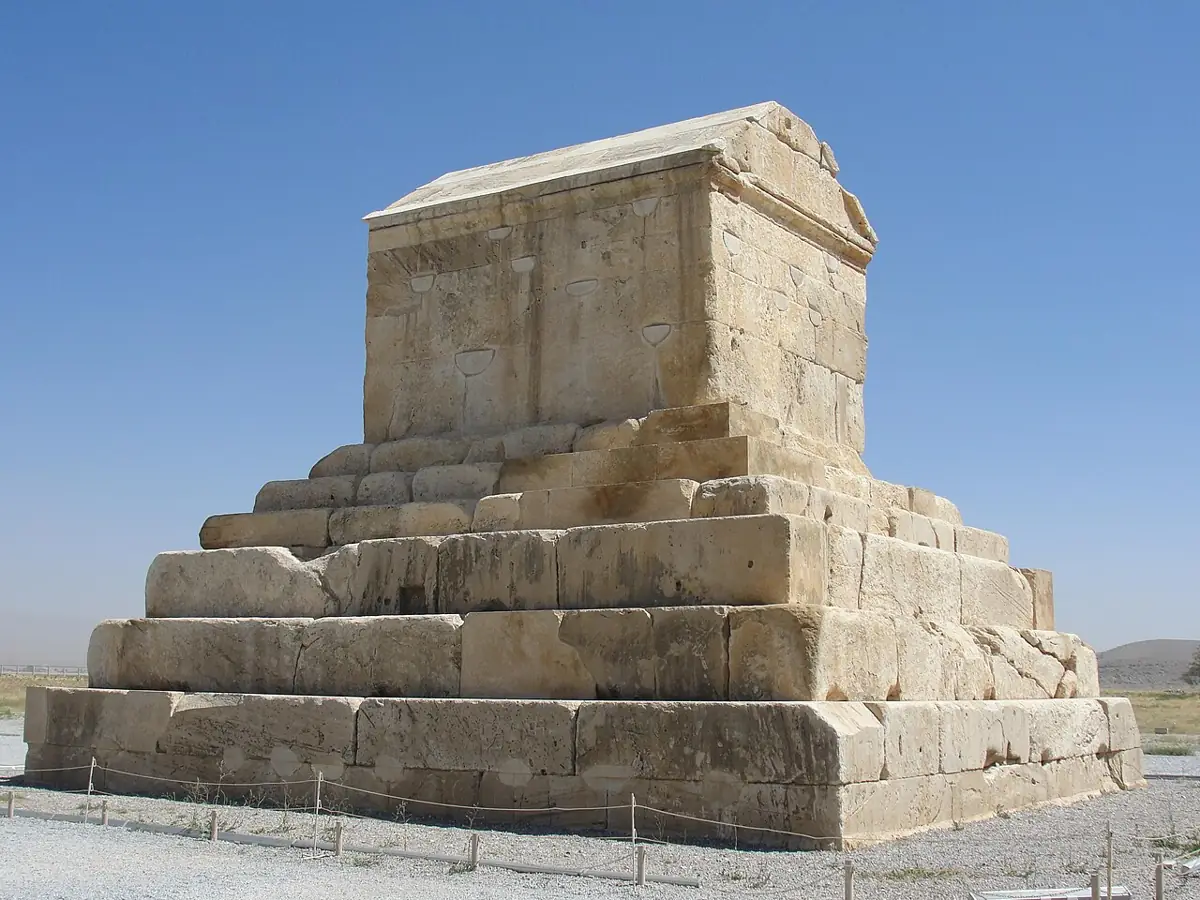
The tomb is built of large, precisely dressed ashlar blocks joined by dovetail clamps. Its total height, with the missing capstone of the roof, is about 11.10 m. The plinth has six tiers and covers 13.35 by 12.30 m. The three lower tiers are 1.05 m high each, the three upper ones 0.57 m each. The base of the chamber is 6.40 by 5.35 m. A narrow door, 1.39 m high and 0.78 m wide, leads to a room of about 3.17 by 2.11 m with walls 1.5 m thick. The gabled stone roof is hollow inside. The lower half of a rosette is carved on the pediment above the door.
The base of the tomb itself had been made of squared stone in the form of a rectangle. Above there was a stone building surmounted by a roof, with a door leading within, so narrow that even a small man could with difficulty enter, after suffering much discomfort.
Our imagined reconstruction, based on Zournatzi (Iranica 1993), Stronach & Gopnik (2009) and Arrian 6.29. The measurements are published; the setback of the tiers, the colours and the grove are sketches.
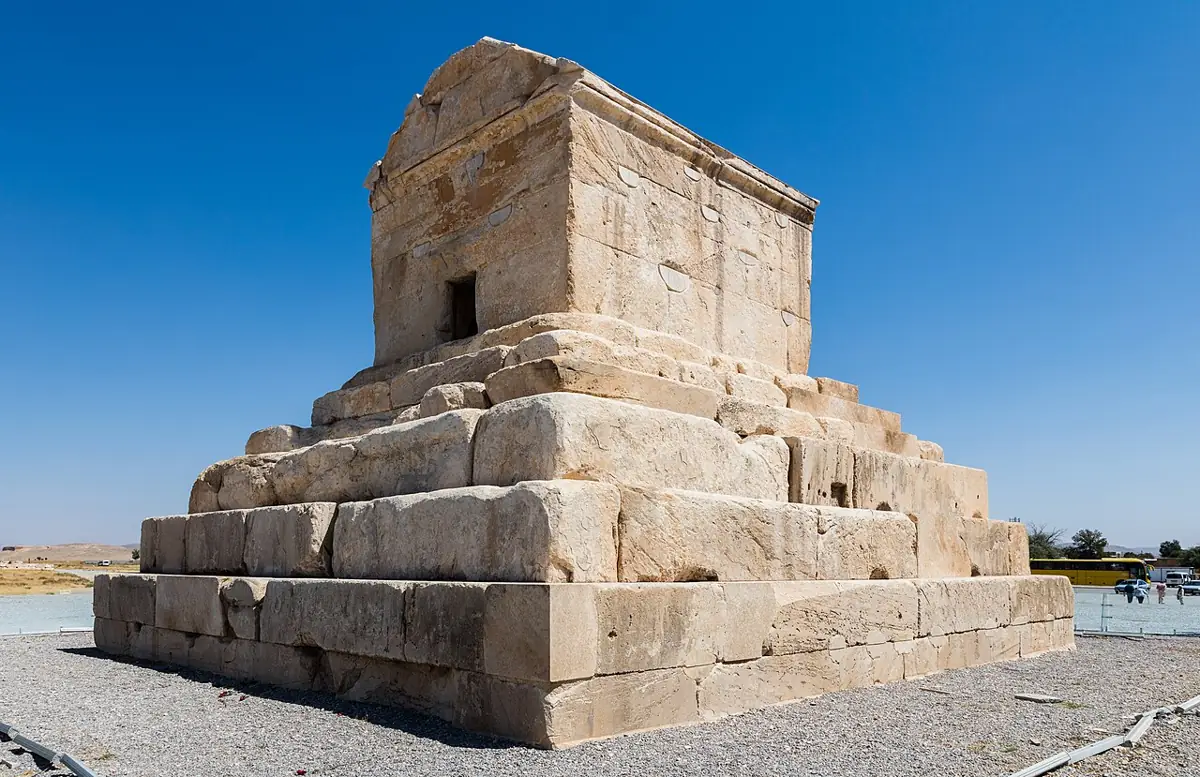
In the reconstruction below, the measurements are from Zournatzi (Iranica); the setback of the tiers and the grove are sketches. This is our imagined reconstruction, not an archaeological drawing.
The tomb’s simplicity differs from the grandeur of his successors’ rock tombs. Darius and his heirs were buried in the cliff face at Naqsh-e Rostam.
Sources: A. Zournatzi, Encyclopaedia Iranica · D. Stronach and H. Gopnik, Encyclopaedia Iranica · D. Stronach · Arrian, tr. E. J. Chinnock
Dossier · 13
The garden: the first known chahar bagh
Arrian, after Aristobulus, says the tomb stood in the royal park, surrounded by a grove of all kinds of trees, watered by a stream, with high grass in the meadow. At Pasargadae, stone channels and basins form two rectangles in front of Palace P. The position of the throne in the portico facing the garden suggests a garden in four parts. Stronach considers it the first known chahar bagh.
The tomb of the famous Cyrus was in the royal park at Pasargadae, and around it a grove of all kinds of trees had been planted. It was also watered by a stream, and high grass grew in the meadow.
Stronach and Gopnik suggest the four-part garden may have evoked the title “king of the four quarters”. This is a hypothesis.
The chahar bagh, the pattern of many gardens in Iran and beyond, goes back to Pasargadae.
Sources: Arrian, tr. E. J. Chinnock · D. Stronach and H. Gopnik, Encyclopaedia Iranica
Dossier · 14
Inside the tomb and its inscription
Arrian, following Aristobulus, describes the inside: a golden coffin with Cyrus’ body, a couch with golden feet, Babylonian carpets, garments and ornaments. Strabo gives the same report a little differently: he calls the tomb a “small tower” within dense trees and adds a table with cups to the list. The two also give the tomb’s inscription in two versions, and Strabo adds a third from Onesicritus.
In the building lay a golden coffin, in which the body of Cyrus had been buried, and by the side of the coffin was a couch, the feet of which were of gold wrought with the hammer.
a golden couch, a table with cups, a golden coffin, and numerous garments and ornaments set with precious stones
O man, I am Cyrus, son of Cambyses, who founded the empire of the Persians, and was king of Asia. Do not therefore grudge me this monument.
O man, I am Cyrus, who acquired the empire for the Persians and was king of Asia; grudge me not, therefore, my monument.
Here I lie, Cyrus, king of kings.
Whether that inscription was really on the tomb is unclear; no inscription is visible on it today. Its three versions show that Alexander’s companions each reported it differently.
The line “do not grudge me this monument” is still one of the most quoted lines attributed to Cyrus.
Sources: Arrian, tr. E. J. Chinnock · Strabo, tr. H. L. Jones (Loeb, 1930)
Dossier · 15
Alexander and the plundered tomb
Arrian says that on his return from India Alexander found the tomb plundered. Only the coffin and the couch remained. Alexander had the Magi guards tortured to name the robbers, but they said nothing and were released. He then ordered Aristobulus to restore the tomb, wall up the door with stone and put the royal seal on it. According to Arrian, the Magi guards received a sheep, flour and wine every day, and a horse every month for sacrifice.
Alexander, who had burned the palaces of Persepolis a few years earlier, now had Cyrus’ tomb restored. This is our reading: he wanted to be seen as Cyrus’ legitimate heir.
The tomb was one of the first monuments that a foreign conqueror restored for his own legitimacy.
Sources: Arrian, tr. E. J. Chinnock · Strabo, tr. H. L. Jones (Loeb, 1930)
Dossier · 16
Where the tomb’s form came from: theories
No exact parallel for the tomb has been found. Scholars have suggested various sources:
Mesopotamia and Elam: the stepped plinth recalls the ziggurats (Herzfeld, Nylander).
Western Asia Minor: the gabled chamber resembles the chambers of Lydian burial mounds, and its doorframe and mouldings are Lydo-Ionian. The only close parallel for the plinth may be the “pyramid tomb” at Sardis.
Urartu and Persia itself: some point to local tombs and houses with pitched roofs.
The rosette above the door may recall the end of a wooden roof beam (Stronach).
Stronach and Gopnik say there is “no single convincing source” for the form. So it is better seen as a new synthesis, just as the winged figure combines several arts.
Like Cyrus’ empire itself, the tomb took something from each land and made something new.
Sources: A. Zournatzi, Encyclopaedia Iranica · D. Stronach and H. Gopnik, Encyclopaedia Iranica · C. Nylander · D. Stronach
Dossier · 17
Later history: the “Shrine of the Mother of Solomon”
In the Islamic period local people called the tomb the “Shrine of the Mother of Solomon”. Saʿd b. Zangi, the Salghurid atabeg of Fars (1203–1231), made it part of a mosque. A mihrab in the south-west wall of the chamber and a compass-like mark on the southern corner of the plinth survive from that use. The Venetian envoy Barbaro called it the “tomb of the Mother of Solomon”, and Mandelslo drew it. James Morier (1812) suggested this was Pasargadae but then rejected the idea. Robert Ker Porter became convinced it was Cyrus’ tomb after Grotefend read the name Cyrus in the inscriptions there. The debate went on through the 19th century. The modern identification rests on the match with Arrian’s and Strabo’s descriptions.
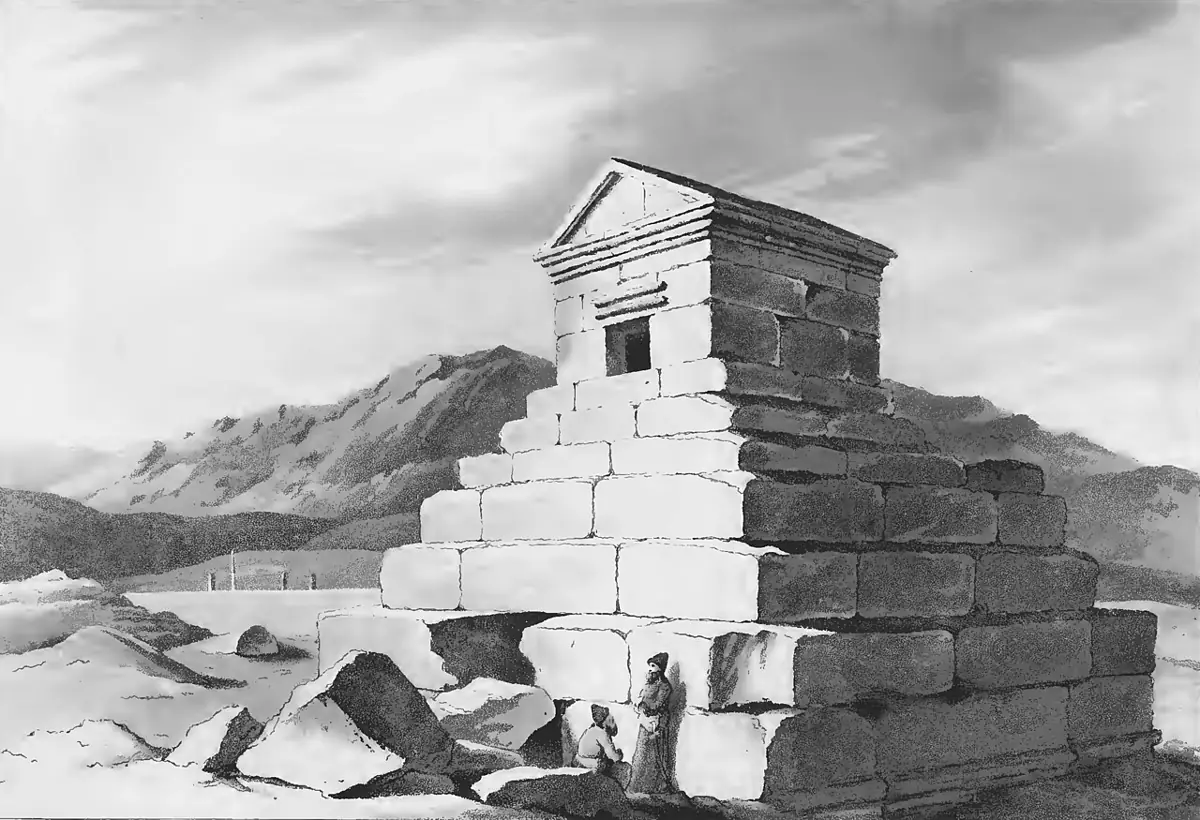
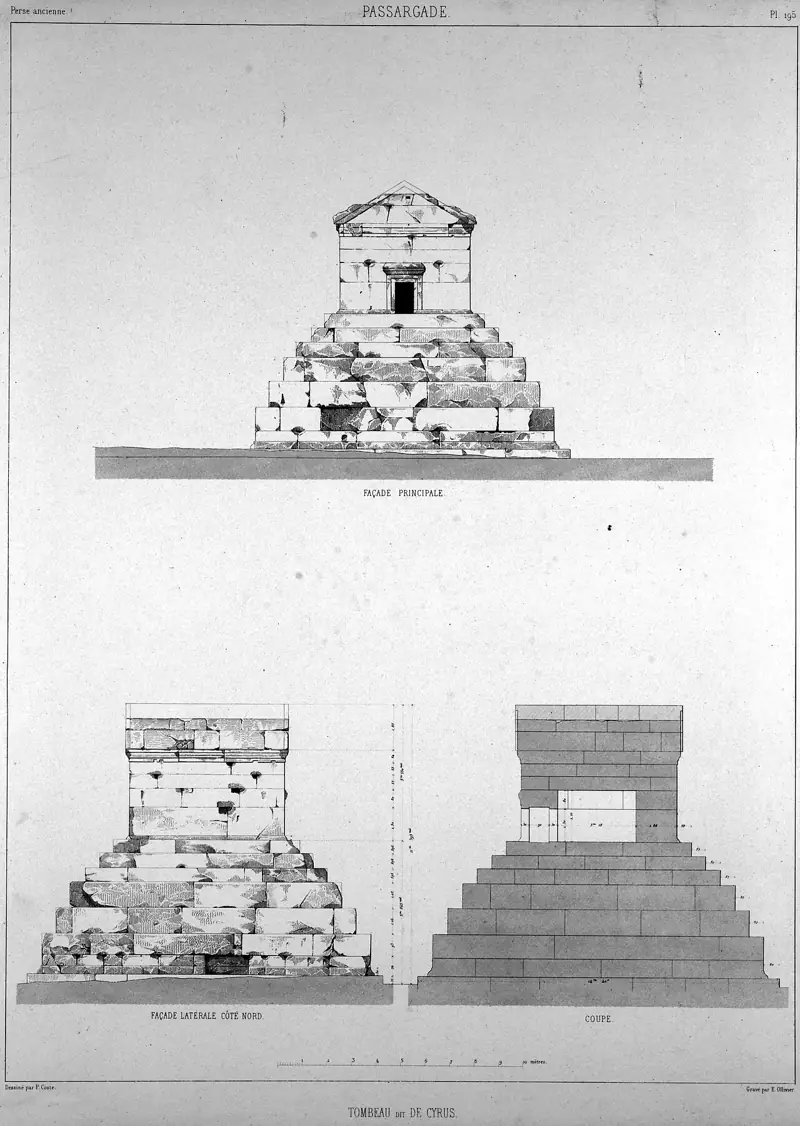
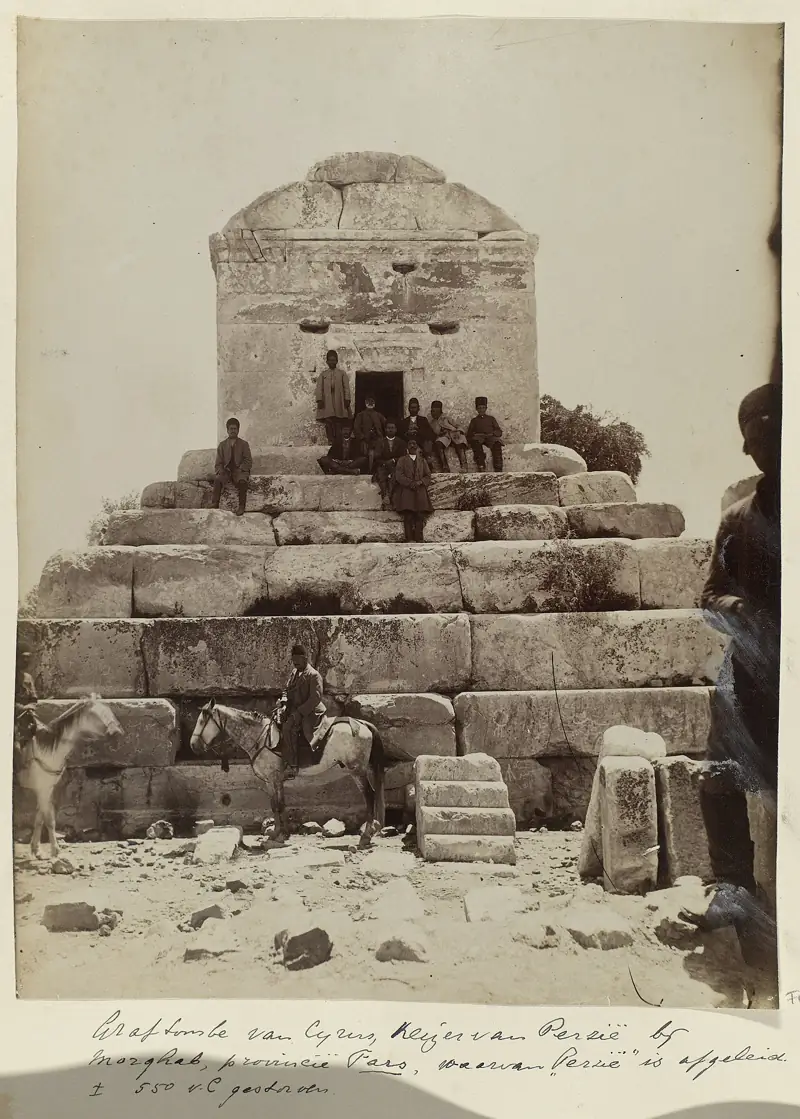
Perhaps the name “Mother of Solomon” itself saved the tomb from destruction. Scientific excavation was carried out by Herzfeld (1928), Ali Sami (1949–1955) and Stronach (1961–1963). The tomb was restored for the 2,500-year celebrations (1971) and again in the 2000s.
Today the tomb is a symbol of national identity for many Iranians.
Sources: A. Zournatzi, Encyclopaedia Iranica · D. Stronach and H. Gopnik, Encyclopaedia Iranica · Wikipedia
Dossier · 18
Property and liberty: gifts instead of tribute
Several reports about Cyrus concern property. The Nabonidus Chronicle says Ecbatana’s treasure became booty and plunder was taken at Opis; the same chronicle says the rites at Babylon were not interrupted and the gods returned to their cities. Herodotus says that under Cyrus there was no fixed tribute, only gifts.
This is our reading: Cyrus treated the property of enemies who resisted like any ancient conqueror, but in cities that surrendered without battle he left property and temples alone. No fixed tribute meant both a lighter burden and fewer rules. Darius fixed the tribute; it became more predictable, but according to Herodotus people found it heavier.
For Cyrus, the security of property depended on submission, not on a right. Even so, Herodotus’ contrast of “father” and “merchant” shows that people already judged government by how far it reached into their property.
Sources: Babylonian chronicle (ABC 7), tr. A. K. Grayson (1975), on Livius.org · Herodotus, tr. A. D. Godley (Loeb, 1920) · M. A. Dandamayev, Encyclopaedia Iranica
Synthesis: the historical Cyrus and the Cyruses made later
This is our reading. The historical Cyrus was a shrewd conqueror: he took Media when its army turned, Lydia by war, and Babylon with the least violence. He was gentle with cities that surrendered and treated those that resisted like any ancient conqueror.
The Babylonian Cyrus, the Judean Cyrus, the Greek Cyrus and the modern Cyrus were each made for the needs of their time. “Charter of human rights” is a modern label and the Cyropaedia is a novel. But the few documents we have show that he understood that holding an empire needs consent as well as force.
Seen through property and liberty, Cyrus was a “father” because he took little, not because he recognised any right of the people. That distinction, between a kind ruler and a ruler bound by law, recurs throughout Iranian history.
Bibliography
- M. A. Dandamayev, Encyclopaedia Iranica, Cyrus iii. Cyrus II the Great (1993). https://www.iranicaonline.org/articles/cyrus-iii/The spine of this page: checks each event against contemporary documents and keeps the Greek stories apart.
- A. Zournatzi, Encyclopaedia Iranica, Cyrus v. The Tomb of Cyrus (1993). https://www.iranicaonline.org/articles/cyrus-v-tomb/The tomb’s measurements, the Islamic-period mihrab, and the theories about the origin of its form.
- D. Stronach and H. Gopnik, Encyclopaedia Iranica, Pasargadae (2009). https://www.iranicaonline.org/articles/pasargadae/The garden, the palaces, Gate R, the winged figure, the travellers and the excavations.
- Babylonian chronicle (ABC 7), tr. A. K. Grayson (1975), on Livius.org, The Nabonidus Chronicle (online). https://www.livius.org/sources/content/mesopotamian-chronicles-content/abc-7-nabonidus-chronicle/The contemporary Babylonian record of the end of Media, the campaign of 547 and the taking of Babylon. Paraphrased here, not quoted.
- The Cyrus Cylinder (BM 90920), British Museum, Babylonian building inscription of Cyrus, 539/538 BCE (539 BCE). The full text and its discussion are on our separate Cylinder page.
- Herodotus, tr. A. D. Godley (Loeb, 1920), The Histories, books 1 and 3 (Perseus) (1920). https://www.perseus.tufts.edu/hopper/text?doc=Perseus:text:1999.01.0126:book=1:chapter=214Greek, a century after Cyrus. He himself says “many stories” are told of Cyrus’ death.
- Bacchylides, tr. R. C. Jebb, Ode 3, for Hieron of Syracuse (468 BCE; tr. 1905). The oldest Greek account of Croesus’ end; it differs from Herodotus.
- Ctesias of Cnidus (via Photius’ epitome), Persica (c. 390 BCE).
- Xenophon, tr. H. G. Dakyns, Cyropaedia (The Education of Cyrus) (c. 370 BCE; tr. 1914). https://www.gutenberg.org/ebooks/2085A didactic novel about the ideal ruler, not a history.
- Strabo, tr. H. L. Jones (Loeb, 1930), Geography 15.3.7–8 (LacusCurtius) (1930). https://penelope.uchicago.edu/Thayer/E/Roman/Texts/Strabo/15C*.html
- Arrian, tr. E. J. Chinnock, The Anabasis of Alexander, 6.29 (1884). https://en.wikisource.org/wiki/The_Anabasis_of_Alexander/Book_VI/Chapter_XXIXBased on Aristobulus, Alexander’s companion, who saw the tomb.
- The Bible, King James Version, Ezra 1:1–4; Isaiah 44:28–45:1 (1611).
- Darius I, Bisotun inscription (DB) §6, List of the lands (Livius.org) (c. 520 BCE). https://www.livius.org/sources/content/behistun-persian-text/Darius’ list of lands at the start of his reign; scholars infer from it that Cyrus had taken the eastern lands.
- C. Nylander, Ionians in Pasargadae (1970).
- D. Stronach, Pasargadae: A Report on the Excavations Conducted by the British Institute of Persian Studies from 1961 to 1963 (1978).
- Wikipedia, Tomb of Cyrus the Great (restorations of 1970–71 and 2000s) (online). https://en.wikipedia.org/wiki/Tomb_of_Cyrus_the_GreatOnly for the dates of modern restorations; a secondary source.
All photos are from Wikimedia Commons; licence and author were checked on each file page.
The Cyrus CylinderAstyagesDarius the GreatPersepolis and its archives